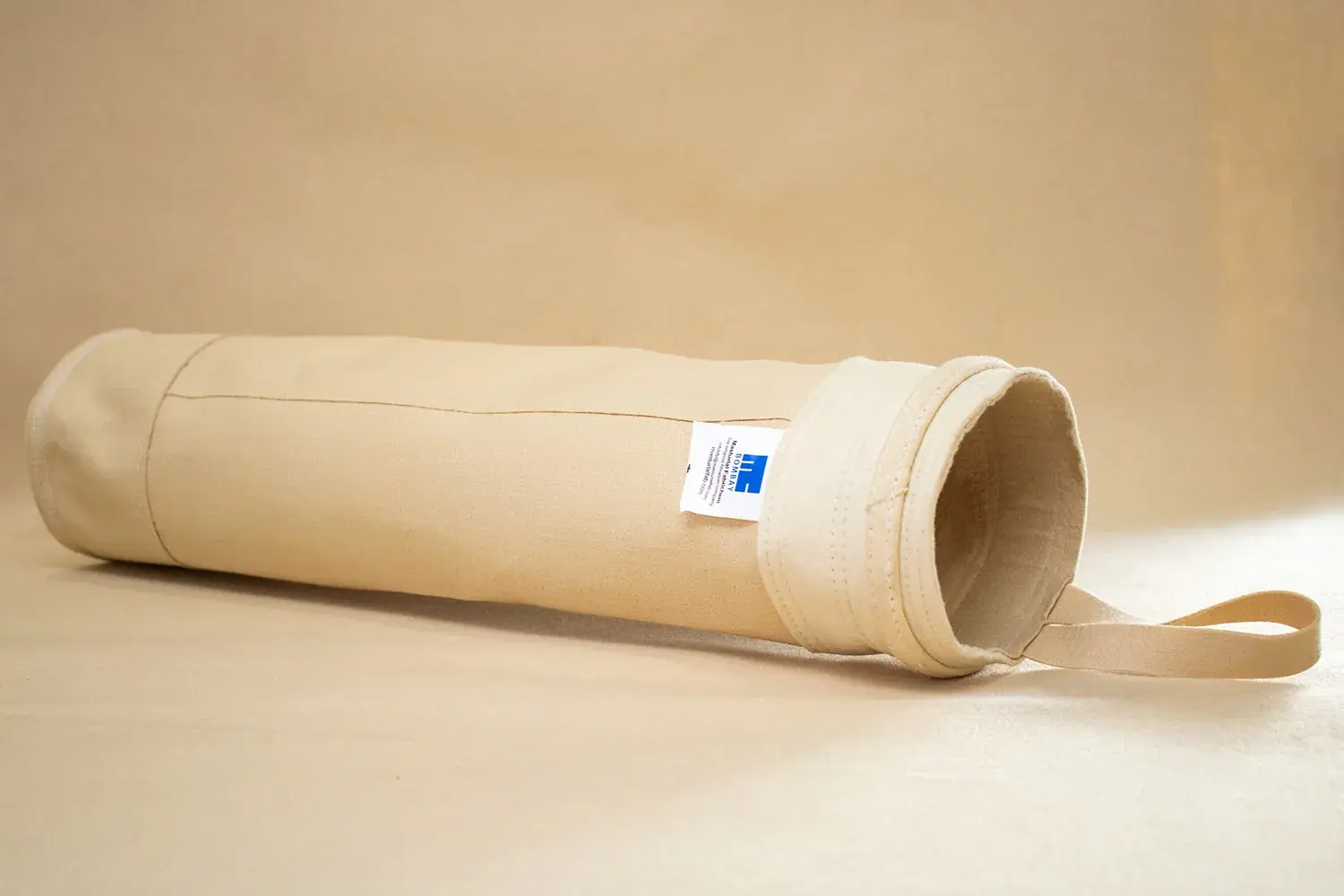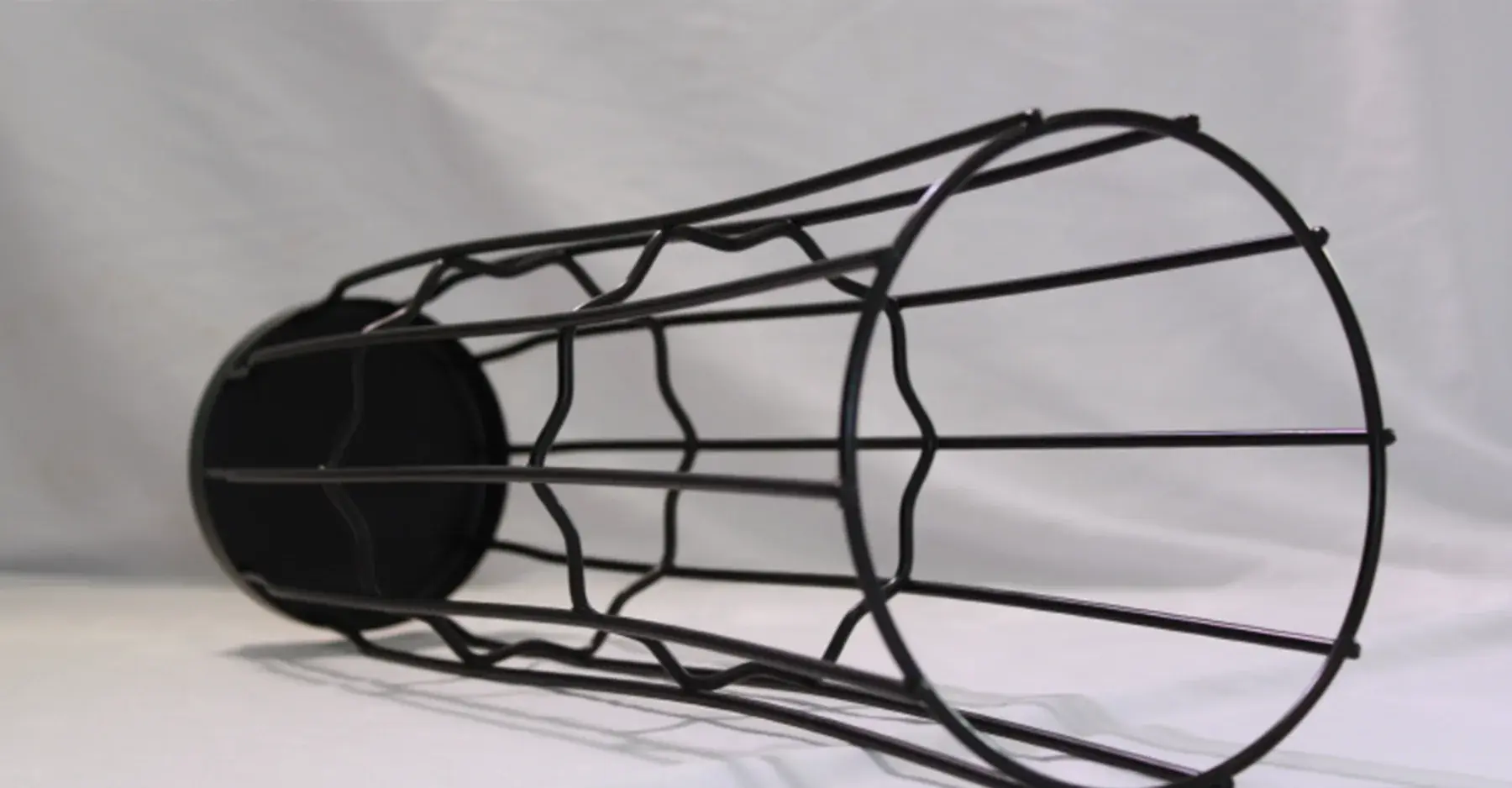
Small dimensional errors can create installation problems, leakage or premature mechanical wear. Measurement should describe the complete interface: tube sheet, bag top, cage top, bag length and bottom geometry.
Filter bag measurements
Measure several representative bags if used components have stretched or deformed.
- Nominal diameter or flat width
- Overall length using a consistent datum
- Snap-band groove / bead geometry if applicable
- Top cuff / ring / cap dimensions
- Bottom disc / reinforcement geometry
- Wear-strip location and width
Cage measurements
Record the cage as an assembly, including joint details on multi-piece cages.
- Outside diameter
- Overall length
- Number and diameter of vertical wires
- Ring spacing and ring geometry
- Top venturi / collar design
- Bottom cap design
- Number and type of cage joints
Tube-sheet interface
The opening and top-loading arrangement determine whether nominal bag diameter alone is sufficient.
- Tube-sheet hole diameter
- Tube-sheet thickness where relevant
- Centre-to-centre spacing
- Top-access limitations
- Venturi position and projection
Photograph the details
Include scale-referenced photographs of the top, bottom, joint, damage zone and tube-sheet interface. An overall photo without dimensional context is rarely enough.