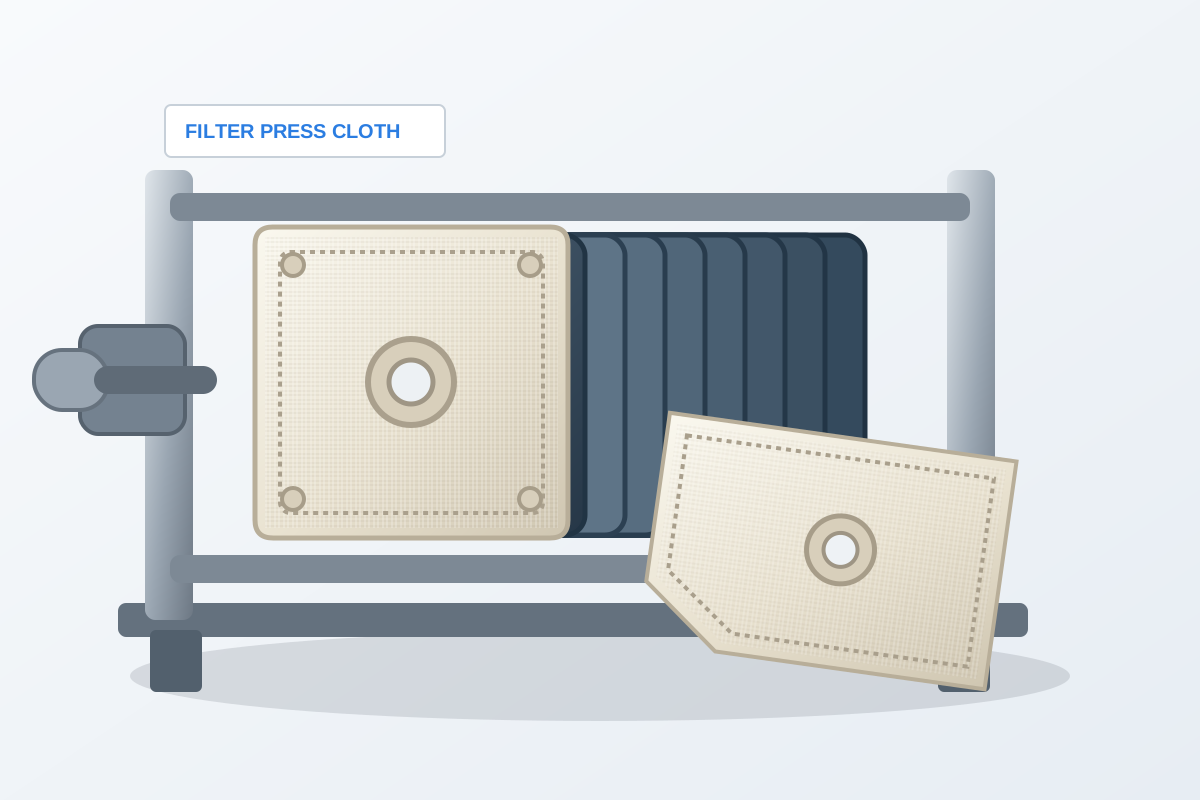
The best cloth is not simply the finest weave. Filtration rate, particle retention, cake release, blinding tendency, chemical compatibility and mechanical life must be balanced for the actual slurry and press.
Process data
Begin with slurry solids, particle distribution, liquid chemistry, temperature and viscosity. Laboratory or plant trial data can be more valuable than nominal micron language alone.
Filter press geometry
Plate type, plate dimensions, feed-eye arrangement and sealing surface define the finished cloth pattern and attachment details.
Construction trade-offs
Weave, yarn type and surface treatment influence initial clarity, permeability, cake release and resistance to blinding. The optimum can differ between startup and steady operation.
Failure evidence
Photographs and failed samples can distinguish chemical degradation, abrasion, stretching, seam failure, blinding and poor cake discharge.
What to send in an RFQ
Provide plate drawing / cloth sample, slurry details, cycle time, filtration pressure, current cloth, current life, wash method and the primary performance objective.