
Baghouse cleaning architecture
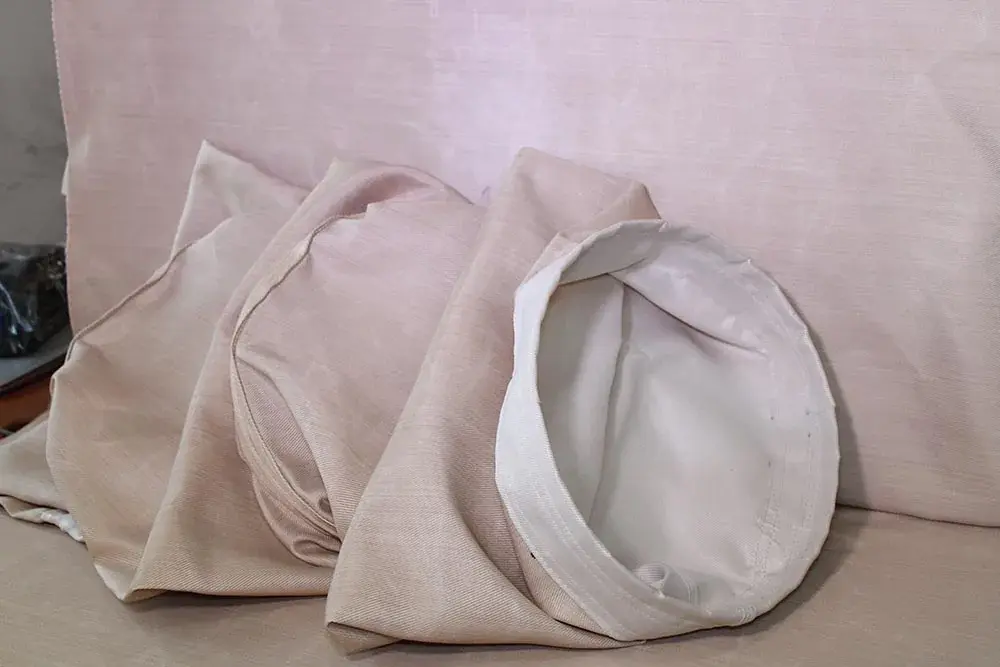
Reverse-Air Filter Bags
Reverse-air baghouses impose different mechanical and cleaning conditions from pulse-jet collectors. Bag construction, media flexing, support geometry, tensioning and cleaning movement need to be reviewed as part of the collector system.
Detailed RFQ configuration
Configure Reverse-Air Filter Bags in the RFQ shop.Choose the required quality, construction, exact dimensions, quantity and application details before adding the line to your basket.
Masturlal FabrichemIndustrial filtration
Where it is used
Application context matters.
The same nominal filter-media family can perform very differently when temperature, chemistry, dust, moisture, cleaning energy and collector geometry change. These are common use cases, not automatic material approvals.
- Cement kiln and raw-mill RABH systems
- Large reverse-air baghouses
- High-temperature woven-media collectors
- Legacy baghouse replacement and retrofit
Selection inputs
What engineering should review before finalising the bag.
- Collector and compartment geometry
- Bag diameter and length
- Cleaning movement and tensioning
- Temperature and gas chemistry
- Media flex characteristics
- Cage or support arrangement and installation method
Media & construction routes
Configured to the approved duty.
Fiberglass woven mediaSelected felt constructions where collector design permitsMembrane grades where specifiedApplication-specific finishes and reinforcements
Final material, finish, membrane, GSM, construction and performance values are governed by the approved technical specification and application review.
Related engineering pages
Go deeper into the collector, application and supporting components.
Filter bag FAQs
Questions procurement and plant teams ask.
How are reverse-air filter bags different from pulse-jet bags?The cleaning mechanism, support arrangement, mechanical movement and typical bag geometry differ. Construction details should therefore be matched to the actual reverse-air collector rather than copied from a pulse-jet specification.
What information is most useful for an RABH replacement?Collector drawing, bag dimensions, top and bottom construction, support arrangement, existing media, operating temperature and chemistry, current bag life and failure observations are useful starting inputs.